Ham Radio Field Day: From a 1933 Portable Test to SARC’s 2026 Open House
Every June, amateur radio operators across North America pack radios, antennas, batteries, generators, laptops, coax, tents, tables, and a lot of enthusiasm into parks, fields, emergency operations centers, school grounds, church campuses, and backyards. The event is called ARRL Field Day, and it is one of the best ways to understand what ham radio is really about.
Field Day is part picnic, part campout, part technical challenge, part public service exercise, and part friendly operating event. The goal is simple: set up radio stations, often away from permanent station locations, and make as many contacts as possible while learning how to communicate under less-than-perfect conditions. ARRL describes Field Day as ham radio’s open house and the most popular on-the-air event held annually in the United States and Canada.
For the public, Field Day answers an important question: What happens when normal communication systems are overloaded, damaged, or unavailable? For new hams, it answers an equally important question: How do I actually get on the air, make contacts, and become part of the amateur radio community?
A Brief History of ARRL Field Day
1933: The First International Field Day
The first ARRL Field Day was held June 10–11, 1933, under the name International Field Day. F. E. “Ed” Handy, W1BDI, then ARRL Communications Manager, is credited with conceiving the event. At first, it was presented as a practical test of portable radio equipment for amateurs in the United States and Canada.
That first event was modest by modern standards. About 50 portable stations participated, and the operating equipment of the day was far heavier and more difficult to power than today’s compact 12-volt transceivers. Early Field Day operators had to solve real problems: how to move equipment, how to power it, how to install temporary antennas, and how to communicate effectively away from the comfort of a home station.
1934: Emergency Preparedness Becomes Central
By the second Field Day in 1934, the purpose had become clearer. Handy described the event in terms of testing the emergency availability of portable stations and equipment. That idea remains at the heart of Field Day today: amateur radio operators practice building functional communication systems quickly, safely, and effectively when normal infrastructure cannot be assumed.
In the early years, portable operation was a very different challenge. Vacuum tube transmitters and receivers, high-voltage power supplies, storage batteries, generators, and handmade antennas required planning and teamwork. Field Day rewarded not only operating skill, but also preparation, engineering, improvisation, and cooperation.
World War II and the Postwar Return
During World War II, normal amateur radio activity was suspended, and Field Day was interrupted. After the war, amateur radio returned to the air, and Field Day returned with it. Postwar operators brought back renewed interest in emergency communication, portable operation, traffic handling, and technical experimentation.
The equipment changed dramatically over the decades. Heavy tube equipment gradually gave way to smaller transceivers, improved batteries, better portable antennas, solid-state radios, computers, digital modes, satellite operation, and modern logging software. Yet the basic Field Day question stayed the same: Can we communicate from almost anywhere, with temporary equipment, under abnormal conditions?
Field Day Grows Beyond a Radio Contest
Field Day includes scoring, contacts, multipliers, and operating classes, but it has never been only about points. Clubs use Field Day to train operators, test antennas, practice message handling, demonstrate emergency power, welcome public officials, teach visitors, and introduce new people to amateur radio.
ARRL’s current Field Day objective is to contact as many stations as possible on the authorized Field Day bands while learning to operate in abnormal situations and less-than-optimal conditions. The event also places a premium on emergency preparedness skills and public understanding of amateur radio’s capabilities.
In 2003, ARRL added Class F for stations operating from Emergency Operations Centers. That change reinforced Field Day’s connection to public service and emergency management. Today, Field Day operations may include portable stations in public places, home stations using emergency power, mobile stations, EOC stations, educational activities, digital demonstrations, satellite contacts, and Get On The Air stations designed specifically for new, inactive, and unlicensed participants operating under proper supervision.
ARRL Field Day 2026
ARRL Field Day 2026 will be held June 27–28, 2026. Field Day is always held on the fourth full weekend in June. The official ARRL operating period begins at 1800 UTC Saturday and ends at 2059 UTC Sunday.
Field Day contacts are made on the 160-, 80-, 40-, 20-, 15-, and 10-meter HF bands, as well as all bands 50 MHz and above. Field Day activity is not permitted on the 60-, 30-, 17-, or 12-meter HF bands. Voice, CW, and digital modes all have a place in the event.
Why New Hams Should Attend Field Day
Getting an amateur radio license is exciting, but many new hams quickly discover that passing the exam is only the beginning. Field Day helps bridge the gap between “I have a call sign” and “I know how to operate.”
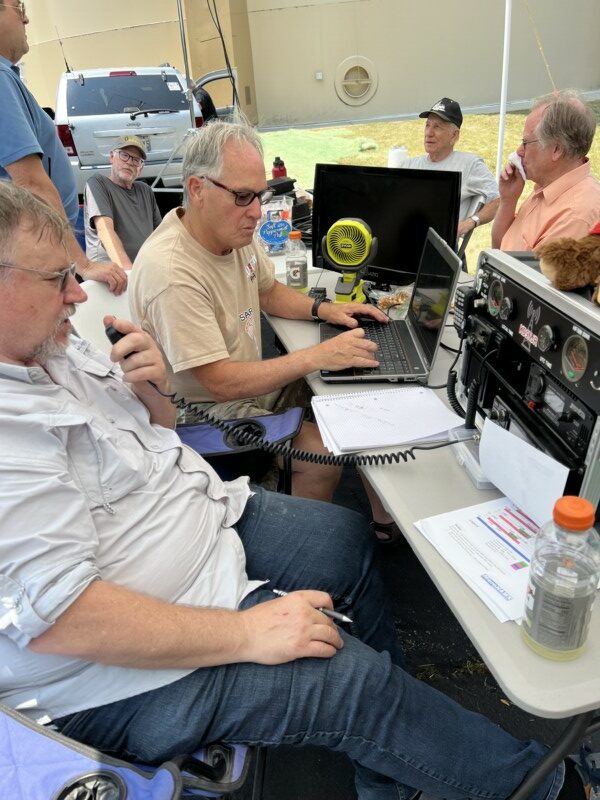
At Field Day, new hams can watch experienced operators handle contacts, log stations, use phonetics, change bands, troubleshoot antennas, manage noise, and work as a team. You can see how HF, VHF, CW, SSB voice, and digital communication fit together. You can ask questions without feeling like you are interrupting anyone’s home station. You can see what gear works well in the field and what “portable” really means.
Most importantly, Field Day gives new hams a low-pressure way to get on the air. You do not need to have a perfect station at home. You do not need to own an HF radio. You do not need to know everything. You only need curiosity and a willingness to learn.
Why the General Public Should Visit Field Day
Ham radio is often invisible until it is needed. Field Day brings it into the open.
Visitors can see how radio signals travel beyond cell towers, Wi-Fi networks, and the internet. Families can watch operators talk to stations across the country. Students can connect radio with science, electronics, geography, weather, emergency preparedness, and public service. Community leaders can see why trained amateur radio volunteers remain useful when storms, power failures, or other disruptions affect normal communication systems.
Field Day is also simply fun. There are antennas in the air, radios on the table, maps, headsets, microphones, Morse code, computer screens, signal reports, and operators celebrating each new contact. For many people, the first time they speak into a microphone and hear a distant station answer back is the moment radio becomes real.
Visit the SARC Field Day 2026 Event
The Schaumburg Amateur Radio Club invites new hams, experienced operators, families, students, neighbors, and the general public to attend the SARC Field Day 2026 event.
SARC Field Day 2026 Details
- Event: SARC Field Day 2026
- Member ONLY 24 hour on-air time: 1:00 p.m. Saturday, June 27, 2026 to 1:00 p.m. Sunday, June 28, 2026
- Public on-air time: 1:00 p.m. to 4:00 p.m. Saturday, June 27, 2026
- Location: St. Peter Lutheran Church, 202 E. Schaumburg Road, Schaumburg, Illinois 60194
- Parking: Park in the northernmost lot. SARC will be in the North Field.
- Information and signup: SARC Field Day 2026 page
SARC’s Field Day site is designed to be welcoming. If you have never talked on a ham radio before, SARC can help you get on the air. No amateur radio license is required for visitors using the public Get On The Air station under the guidance of SARC coaches and the required control operator.
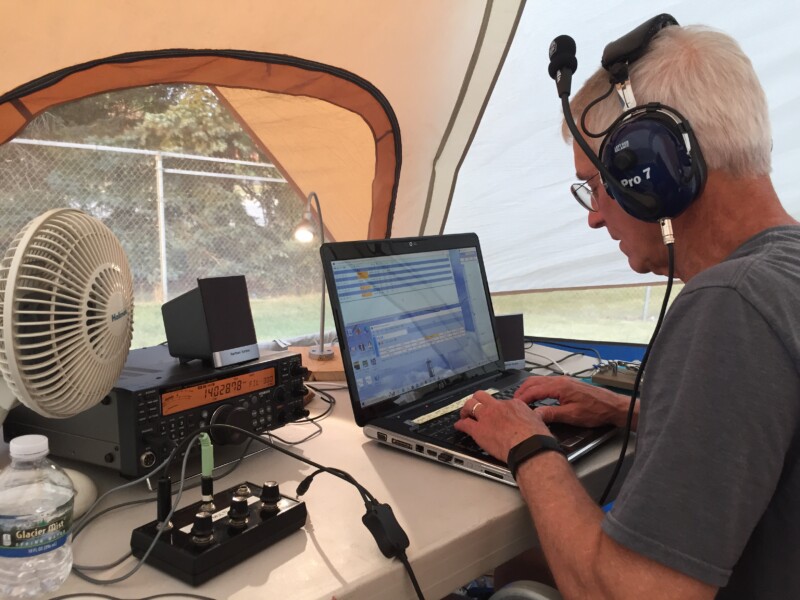
SARC plans to operate four radios for the event. One station is open to the public, where visitors can make a first contact with help from experienced operators. SARC will also demonstrate digital communication methods, and visitors are welcome to observe club members operating CW, SSB voice, and VHF voice stations.
What You Can Do at the SARC Field Day Site
Make Your First Radio Contact
The Get On The Air station is the place to start. A SARC coach will explain what to say, when to speak, and how the exchange works. You may be surprised how quickly a first contact happens.
See Different Modes in Action
Modern amateur radio is more than voice. At Field Day, visitors may see voice operation, Morse code, VHF communication, and digital methods. Each mode has its own strengths, and Field Day is a great way to compare them.
Learn How Portable Stations Are Built
Field Day stations need antennas, feed lines, power, shelter, logging, safety planning, and teamwork. Walking around the site can teach as much as sitting at the radio.
Ask Questions About Getting Licensed
Thinking about becoming a ham? Field Day is one of the best times to meet people who can explain the license process, recommend study resources, and help you find your next step.
Meet the Local Amateur Radio Community
Ham radio is a technical hobby, but it is also a community. Field Day brings operators together to teach, learn, serve, experiment, and enjoy the hobby.
Why Field Day Still Matters
We live in a connected world, but much of that connection depends on infrastructure we do not control: power grids, internet providers, cellular networks, fiber lines, servers, and towers. Amateur radio is different. A trained operator, a radio, a power source, and an antenna can create a communication path from a field, a parking lot, a shelter, an emergency operations center, or a backyard.
That does not mean ham radio replaces modern systems. It means amateur radio adds resilience. Field Day is where that resilience becomes visible. It is where operators practice, where new hams gain confidence, and where the public can see that radio communication is still practical, relevant, and exciting.
From the first International Field Day in 1933 to the SARC Field Day 2026 event in Schaumburg, the spirit of Field Day has remained remarkably consistent: get on the air, learn by doing, welcome others, build skills, and be ready to serve.
Make Plans to Attend
Whether you are a licensed ham, a brand-new Technician, a student, a parent, a scout, a teacher, a public official, a neighbor, or just someone who wonders what those antennas are for, SARC Field Day is for you.
Stop by St. Peter Lutheran Church in Schaumburg during SARC’s public operating hours. Park in the northernmost lot, look for the North Field, and ask for the Get On The Air station.
Come see what ham radio can do. Better yet, come make your first contact.
Visit the SARC Field Day 2026 information and signup page
Sources and Image Credits
- ARRL Field Day — current Field Day overview, 2026 dates, operating period, objective, and bands.
- ARRL Letter, May 31, 2002 — first International Field Day date and early purpose.
- ARRL: W8CDX Takes Field Day Back to its Roots — F. E. Handy, W1BDI, and the 1933/1934 historical background.
- ARRL Field Day Rules — GOTA station and control-operator information.
- ARRL Letter, February 7, 2003 — addition of Field Day Class F for Emergency Operations Centers.
- SARC Field Day 2026 — SARC event time, location, public station, operating stations, parking, and signup information.
- St. Peter Lutheran Church Directions & Maps — venue address.