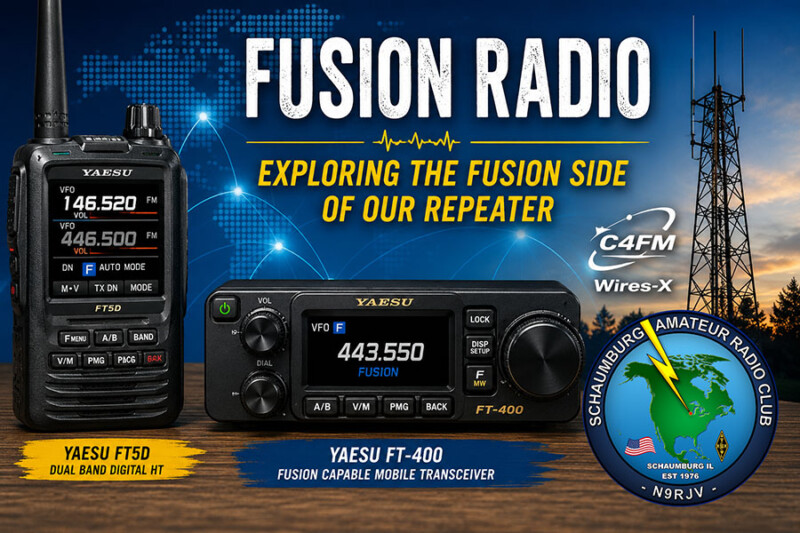
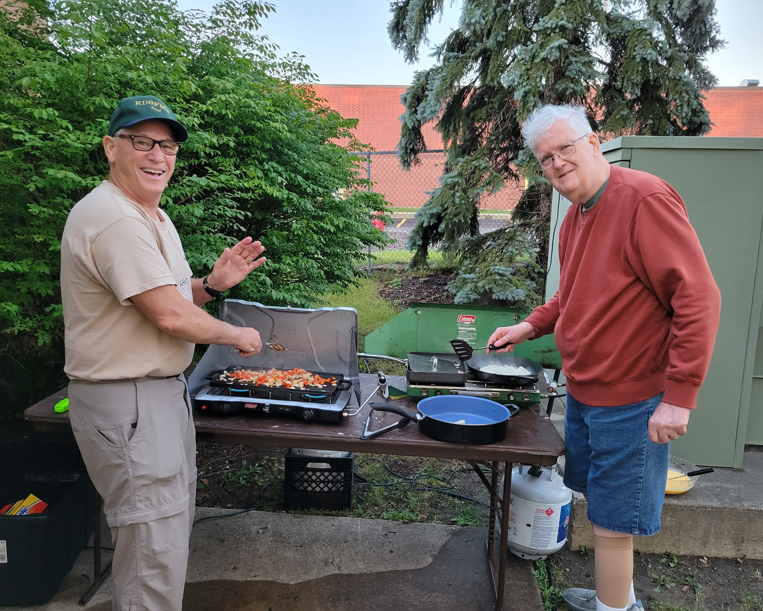
A club-focused guide for Schaumburg Amateur Radio Club members who already know the analog side of the system but have not yet used the Yaesu System Fusion side of the club’s UHF machine. This version is written for practical first use on a Yaesu FT5D handheld and a Yaesu FTM-400 mobile.
Prepared for SARC members. Language: en-US. Date context: 2026-05-17/18. Scope: SARC repeater use, Fusion basics, first-time programming, operating differences from DMR and D-STAR, memory setup, etiquette, and troubleshooting.
Executive summary
The SARC UHF repeater is published on the current club repeater page as 442.275 MHz output with +5 MHz input, PL 114.8 Hz for analog operation, and a default WIRES-X room identified as IL-K9IIK-ROOM / #40294. SARC’s 2021 Fusion update also says the repeater automatically recognizes analog FM versus Yaesu System Fusion and switches accordingly, which is exactly the use case Yaesu describes for AMS, its automatic mixed-mode function (SARC repeater page; SARC “442.275 MHz UHF Repeater Update – Yaesu Fusion”; Yaesu System Fusion overview).
For most members, the easiest and least confusing approach is to save two memories on each radio: one forced to FM for analog nets and FM-only users, and one set to AMS/Auto for mixed-mode operation or first-time Fusion testing. If you specifically want a digital-only voice path, save a third copy as DN. On Fusion radios, you do not set a DMR color code, and you do not program D-STAR-style RPT / URCALL / DST values for ordinary repeater access. The settings that matter here are the repeater frequency, shift, analog tone when using FM, the radio mode, DG-ID, and optional WIRES-X linking (Yaesu FT5D Operating Manual; Yaesu FTM-400 Quick Manual; Yaesu FTM-400 DG-ID / WIRES-X guide; ARRL Technician Question Pool).
Best first setup: save K9IIK FM as 442.275 / +5.000 / PL 114.8 / FM, and save K9IIK AMS as 442.275 / +5.000 / DG-ID 00/00 / AMS. Start with the AMS memory, listen first, then ask for a short digital audio check (SARC repeater page; Yaesu FT5D Operating Manual; Yaesu FTM-400 Quick Manual).
The SARC Fusion repeater in practical terms
Published repeater values to use
Parameter
Value to use
Practical note
Repeater output / radio receive
442.275 MHz
Published on the current SARC repeater page.
Repeater input / radio transmit
447.275 MHz
Derived from the current SARC listing of +5 MHz input for 442.275 MHz.
Offset
+5.000 MHz
Use this if your radio is not picking the shift correctly by band plan.
Analog PL
114.8 Hz
Required for the analog FM memory.
Fusion capability
Dual-mode FM + C4FM digital
SARC says the repeater automatically recognizes analog FM and Fusion.
Default WIRES-X room
IL-K9IIK-ROOM / #40294
This is the current room label on the SARC repeater page.
Recommended starting DG-ID
TX 00 / RX 00
Safe default unless SARC publishes a different DG-ID.
Source basis for the table above: SARC repeater page and SARC 2021 Fusion update, with operating behavior aligned to Yaesu System Fusion documentation.
Parameters explicitly treated as UNSPECIFIED in this article
Item
Status
What to do for now
Special DG-ID requirement other than 00
UNSPECIFIED
Start with TX 00 / RX 00.
User policy for changing the repeater’s room
UNSPECIFIED
Assume the published room is the normal parked room unless a control operator says otherwise.
Published YSF reflector for the repeater itself
UNSPECIFIED
Treat native repeaters as WIRES-X unless the club documents a different policy.
Digital-only access tone or other gate value
UNSPECIFIED
Not normally required in Fusion; use the published RF settings and DG-ID 00/00.
Club operating takeaway: this repeater is best understood as one shared RF resource that supports three member behaviors: plain old analog FM, local Fusion digital voice, and optional WIRES-X linking when appropriate. That mixed-mode migration path is the design goal Yaesu gives for System Fusion repeaters and AMS-capable radios (SARC 2021 Fusion update; Yaesu System Fusion overview).
Fusion modes, DR versus radio settings, and what does not apply
Yaesu System Fusion mixes ordinary analog FM with C4FM digital. Yaesu describes DN as the normal digital voice/data mode, VW as the higher-fidelity digital voice mode, and AMS as the automatic mode that detects whether the received signal is FM or C4FM and switches accordingly. For a mixed club repeater like SARC’s, AMS is the best default unless you have a specific reason to force FM or DN (Yaesu System Fusion overview; Yaesu System Fusion technical text; SARC 2021 Fusion update).
What matters on Fusion, and what does not
Item
Applies to Fusion on K9IIK?
How to treat it
Receive frequency, transmit shift, analog tone
Yes
These are the repeater basics. Use 442.275, +5.000, and 114.8 Hz for the FM memory.
FM, AMS, DN, VW
Yes
FM for analog-only, AMS for mixed-mode convenience, DN when you want a digital-only voice path, VW only if conditions are strong and you specifically want the higher-fidelity mode.
DG-ID
Yes
Use TX 00 / RX 00 as the baseline unless the club publishes something more specific.
WIRES-X room or node selection
Yes, when linking
Only needed when you intentionally use internet linking.
DR or repeater-list entry
Sometimes
Helpful as a convenience, but verify its underlying values against the current SARC page. Directory entries and radio lists are not a substitute for checking the actual repeater settings.
Color code
No
DMR only. Not applicable to Fusion.
RPT / URCALL / DST
No
D-STAR only. Not applicable to Fusion repeater access.
The easiest way to think about DR on a Yaesu radio is that it is a convenience layer. A DR entry or repeater-list entry may save time, but what really determines whether the repeater works are the stored RF and digital settings inside the radio: frequency, shift, tone if you are on FM, operating mode, DG-ID, and optional WIRES-X node or room selection. That is why it is smart to verify the club repeater manually even if your radio offers a DR entry for it (inference drawn from the Yaesu FT5D Operating Manual and Yaesu FTM-400 Quick Manual).
Simplex versus repeater
In simplex, the radio transmits and receives on the same frequency and the repeater shift is set to SIMPLEX. In repeater operation, the radio uses a shift and, in analog FM, usually a tone as well. On the FT5D, Yaesu exposes repeater shift directly as SIMPLEX / -RPT / +RPT. For a simple radio-to-radio FM check, common U.S. calling frequencies include 146.520 MHz and 446.000 MHz; for a Fusion simplex test, coordinate a locally clear simplex frequency because SARC does not publish a club Fusion simplex channel on the reviewed pages (Yaesu FT5D Operating Manual; ARRL repeater basics; SARC site review).
Hotspot versus repeater
A hotspot is usually a low-power personal internet gateway. A repeater is shared local RF infrastructure. ARRL’s current Technician question pool defines the hotspot in that internet-assisted digital-voice context, and Yaesu adds an important Fusion-specific caution: many third-party hotspots connect to YSF or FCS reflectors rather than to native WIRES-X. So if your radio behaves one way on a hotspot and another way on K9IIK, that is normal and does not by itself indicate a radio problem (ARRL Technician Question Pool; Yaesu System Fusion documentation about hotspot differences).
flowchart TD
    A[Need to use the SARC 442.275 repeater] --> B{What do you want to do?}
    B -->|Join an analog net or talk to FM-only users| C[Select K9IIK FM\n442.275 / +5 / PL 114.8 / FM]
    B -->|First Fusion attempt or mixed activity| D[Select K9IIK AMS\n442.275 / +5 / DG-ID 00/00 / AMS]
    B -->|Intentional digital voice test| E[Select K9IIK DN or AMS]
    E --> F{Need internet linking?}
    F -->|No| G[Use the repeater as a local Fusion machine]
    F -->|Yes| H[Use WIRES-X on the correct band,\nconfirm the room or node,\nand disconnect cleanly when done]
Decision flow for first-time SARC Fusion use. Keep the raw Mermaid code block intact in WordPress; use the snippet at the top of the article to render it on the front end.
FT5D setup
The FT5D is an excellent match for a two-memory SARC workflow because Yaesu explicitly documents that memory storage on the radio includes operating frequency, repeater shift, tone information, and TX/RX DG-ID. For club use, save one memory as K9IIK FM and one as K9IIK AMS. If you later want a forced digital-only voice path, duplicate the AMS memory as K9IIK DN (Yaesu FT5D Operating Manual).
Recommended FT5D settings for K9IIK
Function
Menu path or control
K9IIK FM
K9IIK AMS
Working band
A-band preferred
A-band
A-band, especially if you may use WIRES-X later
Receive frequency
VFO entry
442.275 MHz
442.275 MHz
Auto repeater shift
CONFIG → 14 RPT ARS
ON
ON
Manual shift if needed
CONFIG → 15 RPT SHIFT
+RPT
+RPT
Shift amount if set manually
CONFIG → 16 RPT SHIFT FREQ
5.000 MHz
5.000 MHz
Analog tone mode
SIGNALING → 11 SQL TYPE
TONE
OFF for a dedicated digital memory
Analog tone frequency
SIGNALING → 12 TONE SQL FREQ
114.8 Hz
Not used for the dedicated digital memory
Operating mode
Mode selection
FM
AMS/Auto to start; use DN if you want a forced digital voice memory
DG-ID
Digital settings
Not used for analog access
TX 00 / RX 00
WIRES-X DG-ID
WIRES-X → 5 DG-ID
Not needed
AUTO
Suggested memory tag
Memory label
K9IIK FM
K9IIK AMS
FT5D step-by-step memory procedure
Step
Do this
Result
Tune the repeater
Put the repeater on A-band and enter 442.275 MHz.
You are listening on the correct club output.
Set the shift
Leave RPT ARS ON or manually set +RPT and 5.000 MHz.
Your transmit path should land on 447.275 MHz.
Build the analog memory
Set SQL TYPE to TONE, set the tone to 114.8 Hz, and force FM mode.
This becomes K9IIK FM.
Store the analog memory
Press and hold V/M, choose a memory channel, save it, and label it K9IIK FM.
The analog repeater memory is ready.
Build the Fusion memory
Keep the same receive frequency and shift, use AMS for the operating mode, and verify DG-ID TX 00 / RX 00.
This becomes K9IIK AMS.
Store the Fusion memory
Repeat the save procedure and label the new memory K9IIK AMS.
You now have separate analog and Fusion entries.
Make the first test
Select K9IIK AMS, listen first, then ask for a brief digital audio check.
You confirm the Fusion path before trying WIRES-X.
If you decide to try WIRES-X on the FT5D, keep the repeater on A-band and leave WIRES-X DG-ID at AUTO unless the connected node requires something different. Yaesu’s FT5D WIRES-X manual documents local node search, room selection, and clean disconnect behavior; that is worth reading before you move beyond simple local repeater use (Yaesu FT5D WIRES-X manual).
FTM-400 setup
This article treats “FT-400” as the Yaesu FTM-400DR/XDR family, because that is Yaesu’s Fusion-capable mobile platform and the official manuals are published under that family name. The single most important operating rule on the FTM-400 is that Band A is the digital/analog side, while Band B is analog only. If you want Fusion, put the SARC repeater on Band A (Yaesu FTM-400 product page; Yaesu FTM-400 Quick Manual).
Recommended FTM-400 settings for K9IIK
Function
Where to set it
K9IIK FM
K9IIK AMS
Working side
Main operating side
Band A
Band A
Receive frequency
Band A VFO
442.275 MHz
442.275 MHz
Repeater shift
Band A repeater settings
+5.000 MHz
+5.000 MHz
Operating mode
Mode key cycles Auto → DN → VW → FM
FM
Auto/AMS to start; DN if you want a digital-only voice memory
Analog tone
Band A tone settings
114.8 Hz
Not used for the dedicated digital memory
DG-ID
Hold GM or use the DG-ID settings
Not relevant to analog access
TX 00 / RX 00
WIRES-X DG-ID
DISP(SETUP) → WIRES-X → 5 DG-ID
Not needed
AUTO
Suggested memory tag
Memory label
K9IIK FM
K9IIK AMS
FTM-400 step-by-step memory procedure
Step
Do this
Result
Move the repeater to Band A
Put the SARC memory or VFO frequency on Band A.
Digital modes and WIRES-X are available.
Tune the repeater
Enter 442.275 MHz.
You are listening on the correct club output.
Set the shift
Apply +5.000 MHz shift and verify that transmit would land on 447.275 MHz.
The repeater path is correct.
Build the analog memory
Cycle the mode to FM and set the analog tone to 114.8 Hz.
This becomes K9IIK FM.
Store the analog memory
Use the radio’s Memory Write function and save the channel as K9IIK FM.
The FM memory is ready for analog nets and legacy users.
Build the Fusion memory
Cycle the mode to Auto for AMS or DN for forced digital voice, then verify DG-ID TX 00 / RX 00.
This becomes K9IIK AMS or K9IIK DN.
Store the Fusion memory
Save a second memory and label it K9IIK AMS.
You now have separate analog and Fusion entries.
Optional WIRES-X test
Use the FTM-400’s WIRES-X controls to search for the local node or room. Yaesu documents holding DX to search and using the microphone’s * key to disconnect cleanly.
You can test linking without leaving the node connected unintentionally.
Yaesu’s quick manual says to “normally use the auto mode (AMS)” on the FTM-400. That advice fits the SARC repeater well because the club explicitly describes it as a mixed-mode machine that recognizes analog FM versus Fusion automatically. Put differently: if you just want your first Fusion experience to work with the fewest decisions, use Band A + K9IIK AMS (Yaesu FTM-400 Quick Manual; SARC 2021 Fusion update).
Operating practice, audio quality, linking, and troubleshooting
Best practices for SARC use
The most practical club habit is to listen first, then choose the memory that matches the activity you hear. If the machine is clearly carrying analog FM traffic, use K9IIK FM. If you are not sure, or you are intentionally testing the digital side, use K9IIK AMS. Leave a short pause between overs so others can break in and the repeater has time to reset; that is sound repeater practice regardless of mode (ARRL repeater basics; SARC 2021 Fusion update).
For audio quality, keep microphone technique simple and consistent. Speak in a normal voice, keep the mic position steady, and ask for a quick audio report rather than assuming the mode is at fault. Yaesu distinguishes DN and VW for a reason: DN is the normal digital repeater voice mode, while VW is the higher-fidelity option when conditions are strong. At the edge of coverage, ordinary FM may remain more intelligible than digital voice, so it is entirely normal to fall back to FM when RF is marginal (Yaesu System Fusion overview; Yaesu System Fusion technical text).
For linking, treat the published room as the repeater’s normal parked room unless the club says otherwise. The reviewed SARC material publishes the room but does not document a detailed user policy for moving the repeater between rooms, so the most club-friendly assumption is to avoid casual room changes during general local use and to disconnect cleanly after intentional WIRES-X operation. Also remember that YSF and WIRES-X are not the same thing: many hotspots reach YSF/FCS-style reflectors rather than native WIRES-X (SARC repeater page; Yaesu FT5D WIRES-X manual; Yaesu FTM-400 DG-ID / WIRES-X guide; Yaesu System Fusion hotspot guidance).
Troubleshooting checklist
Validate the transmit frequency first. For current SARC programming, the radio should transmit on 447.275 MHz, not 447.425 MHz.
If you are in FM, verify the tone. The analog PL should be 114.8 Hz.
If you are in Fusion, reset DG-ID to the baseline. Start with TX 00 / RX 00.
On the FTM-400, confirm the repeater is on Band A. Band B is analog only.
If you are unsure which mode the other station is using, use AMS. That is what AMS is for on a mixed-mode machine.
Do not compare hotspot behavior directly to repeater behavior. The network path may be different even if the radio is the same.
If digital audio is choppy, try FM. Weak-signal RF still matters on Fusion.
Ask for an audio report instead of repeated kerchunks. It is more useful and more courteous.
Quick symptom map
Symptom
Likely cause
First action
You hear the repeater but cannot key it in FM
Wrong tone or wrong shift
Check +5.000 MHz and 114.8 Hz.
FM works but Fusion does not
Wrong mode or restrictive DG-ID
Switch to AMS and set DG-ID 00/00.
FTM-400 seems to lose Fusion functions
The repeater is on Band B
Move it to Band A.
Hotspot works but the repeater does not
Different RF and network path
Recheck the actual repeater frequency, shift, tone, and DG-ID values.
Digital audio sounds worse than expected
Weak signal, mic technique, or unsuitable digital mode
Try DN instead of VW, improve mic placement, or switch to FM at the edge of coverage.
Troubleshooting guidance above is based on the SARC repeater parameters and Yaesu’s mode/DG-ID/WIRES-X behavior as documented in the FT5D and FTM-400 manuals.
FAQ, prioritized sources, and changelog
Short FAQ
Do I need PL 114.8 Hz for Fusion digital? Not as the primary Fusion control described here. The club publishes 114.8 Hz for analog FM access. For Fusion, begin with the published repeater frequency and shift, then use AMS or DN with DG-ID 00/00 (SARC repeater page; Yaesu FT5D Operating Manual; Yaesu FTM-400 DG-ID / WIRES-X guide).
Should I use AMS or DN? Use AMS first, because the SARC repeater is explicitly described as a mixed-mode machine that auto-recognizes analog FM versus Fusion. Use DN when you want to force a digital voice path intentionally (SARC 2021 Fusion update; Yaesu System Fusion overview).
Where do I enter color code, RPT, URCALL, or DST? For this Fusion repeater, you generally do not. Color code is a DMR concept, while RPT / URCALL / DST are D-STAR-style routing fields. The relevant Fusion controls are mode, DG-ID, and WIRES-X, plus the normal repeater frequency/shift/tone basics (ARRL Technician Question Pool; Yaesu FT5D Operating Manual; Yaesu FTM-400 DG-ID / WIRES-X guide).
What if my hotspot works but K9IIK does not? Treat them as different systems until proven otherwise. A hotspot is normally an internet-assisted personal gateway; K9IIK is shared club RF infrastructure. The settings, mode behavior, and linking path may differ (ARRL Technician Question Pool; Yaesu System Fusion hotspot guidance).
Which input should I really program? Program 447.275 MHz. This article uses the current SARC repeater page, which lists 442.275 MHz with +5 MHz input shift, and therefore treats the older 447.425 MHz figure as a likely typo (SARC repeater page; SARC 2021 Fusion update).
Assumption one: “FT-400” is treated as the FTM-400DR/XDR family, because that is Yaesu’s System Fusion mobile platform and the documentation set used here is published under that family name.
Assumption two: the earlier 447.425 MHz input figure from the 2021 SARC post is treated as a likely typo. This article uses 447.275 MHz because the current SARC repeater page publishes 442.275 MHz with +5 MHz input shift.
Assumption three: because the reviewed SARC material does not publish a special digital DG-ID or a detailed room-changing policy, those items are marked UNSPECIFIED and the practical recommendation is to begin with DG-ID 00/00 and the published default room.
Implementation note: menu wording can vary slightly by firmware revision, especially on the FTM-400. The operating values in this article are the critical part; if a menu label is slightly different on your radio, choose the nearest equivalent item in the Yaesu manual.
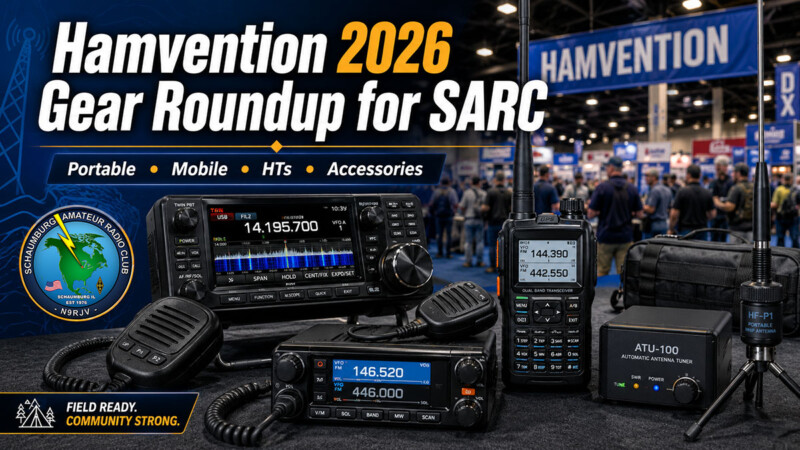
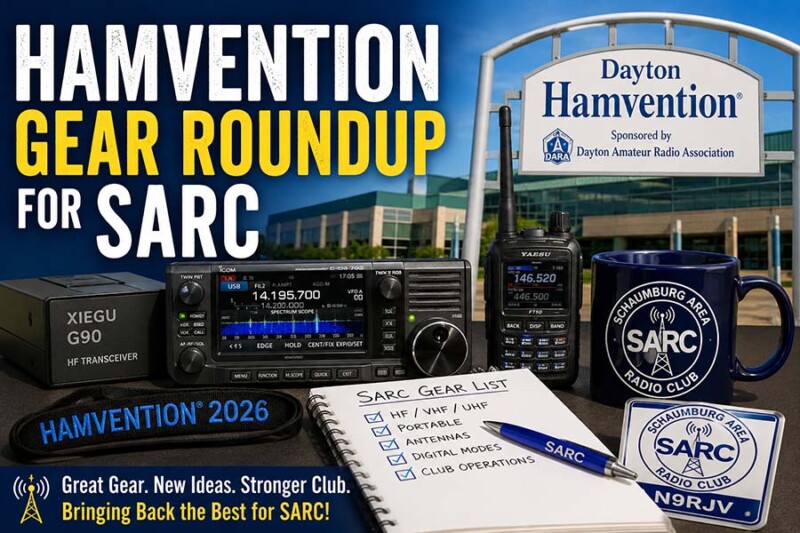
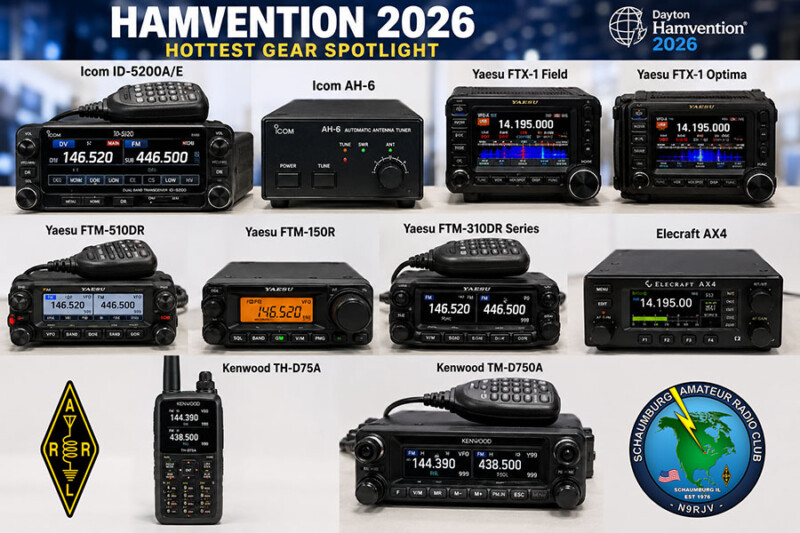
As of Saturday, May 16, 2026, Hamvention is still in progress in Dayton, so this roundup reflects the best public information available through the show’s first full day and early Saturday coverage. The broad pattern this year is clear: portable and hybrid operation remains the hottest segment; Yaesu is pushing a full family of weak-signal-friendly mobiles and its FTX-1 platform; Icom drew heavy interest with the still-unreleased ID-5200 and the newly released AH-6 tuner; Elecraft landed the most interesting portable antenna announcement; and Kenwood’s TH-D75A remains the safest premium handheld buy while the TM-D750A is still a reservation story, not yet a finished retail product. Hamvention itself runs May 15–17, 2026, and ARRL reported large crowds across the exhibit halls on opening Friday.
For SARC members, the highest-confidence purchases today are the Yaesu FTX-1 Field, Yaesu FTX-1 Optima, Yaesu FTM-310DR, Yaesu FTM-150R, and Kenwood TH-D75A because they are public, priced, and already in the dealer/review ecosystem. The most exciting “watch list” products are the Icom ID-5200, Icom AH-6, Elecraft AX4, and Kenwood TM-D750A—all compelling, but each still has at least one major open question around U.S. pricing, finalized availability, or real-world field reviews.
My short take: if SARC members want one radio that best captures the Hamvention 2026 mood, it is the Yaesu FTX-1 Optima—not because it is cheap, but because it most directly matches how many club members actually operate now: field-first, shack-capable, and mode-agnostic. If the club wants a practical value pick, the FTM-150R and FTM-310DR are the strongest budget-to-function stories in this year’s public pricing. If the club wants the most interesting non-radio product, it is the Elecraft AX4.
What stood out on the floor
The strongest theme was integration. Newer products are combining features that used to require separate gear or hard tradeoffs: APRS with D-STAR, field QRP with detachable 100 W amplification, dual-watch mobile operation with improved weak-signal filtering, or compact portable antennas that now tolerate much higher power than older “ultraportable” designs. That theme shows up in the Icom ID-5200, Kenwood TH-D75A, Kenwood TM-D750A, the Yaesu FTX-1 line, and the Yaesu 510/310/150 mobiles.
The second theme was portable operation without apology. The FTX-1 series is explicitly built around field use; the AH-6 is a compact weather-resistant tuner for long-wire or 50-ohm antennas; and the AX4 is Elecraft’s attempt to bridge the gap between tiny QRP whips and bulkier portable verticals. Hamvention’s own format and crowd profile continue to reward this kind of equipment.
The third theme was good but incomplete news from pre-release products. The Icom ID-5200 and Kenwood TM-D750A are exactly the sort of radios that create aisle traffic and club chatter, but they are still not fully settled U.S. buy-now products. That matters for an article aimed at SARC members who want actionable buying advice rather than just excitement.
APRS/D-STAR/GPS triband mobile with color LCD and dual receive
U.S. price TBD; dealer pages show a $35 reservation deposit and Q3 2026 ETA.
High-interest, high-uncertainty.
The citations in the product names and price cells link to the manufacturer, dealer, or review pages that also carry product photos/spec sheets where publicly available.
Product-by-product analysis
Icom ID-5200
Manufacturer: Icom. Category: VHF/UHF. Key features: 144/430 MHz dual-band operation, FM and DV, simultaneous dual reception, touchscreen interface, airband receive, Wi‑Fi, Bluetooth, internal gateway functions, APRS/GNSS features, USB-C, and microSD support. Price: U.S. price not announced. Availability: Public U.S. dealer pages still show reservation or stock-alert status rather than a completed U.S. retail launch; HRO explicitly says the radio has not been formally released for sale in the U.S. and is not yet FCC-approved for U.S. sale. Target user: D-STAR mobile operators, APRS users, EMCOMM-focused operators, and anyone who wanted a true successor to the ID-5100 with modern connectivity.
The case for the ID-5200 is obvious: it looks like the most feature-complete next-generation D-STAR/APRS mobile now publicly visible, and it directly answers the market’s long-standing demand for a more connected, better-displayed Icom mobile. The case against it is equally obvious: no U.S. price, no firm U.S. availability, and no meaningful body of real-world field reviews yet. My verdict for SARC is simple: watch closely, but do not rush to sell an existing ID-5100 or TM-V71/TM-D710-class setup until U.S. pricing and first real reviews land.
Pros: probably the strongest VHF/UHF/D-STAR feature stack shown at Hamvention.
Cons: still pre-release in the U.S. Aggregate opinion: Most promising unreleased mobile of Hamvention 2026.
Icom AH-6
Manufacturer: Icom. Category: Accessory. Key features: automatic antenna tuning from 1.8–54 MHz, long-wire and 50-ohm antenna support, IP54 weather resistance, 120 W max input, 200 memories, reduced RF output during tuning, and a package that dealer literature describes as 50% smaller and lighter than the AH-730. Price: no public U.S. MSRP/street price yet. Availability: officially released on May 15, 2026. Target user: portable HF, field-day setups, emergency deployments, and operators who want faster, cleaner multiband long-wire deployments.
This is one of the smartest practical products shown this year because it targets a real operating pain point rather than a spec-sheet fantasy. A compact, weather-resistant tuner with long-wire support is exactly the kind of thing that matters to SARC members who do Field Day, temporary deployments, POTA, or backup-station planning. The downside is not technical; it is commercial: U.S. price visibility is still poor. Still, if Icom prices it sensibly, the AH-6 could become one of the year’s quiet winners.
Pros: highly relevant to real field operation, weather-resistant, broad HF/6 m coverage.
Cons: U.S. price still unknown. Aggregate opinion: One of the most useful new products at Hamvention 2026.
Yaesu FTX-1 Field
Manufacturer: Yaesu. Category: Portable. Key features: HF/50/144/430 MHz all-mode SDR coverage, wide receive coverage from 30 kHz to 174 MHz and 400–470 MHz, two independent receivers, C4FM/WIRES-X capability, battery-backed field operation, and a modular “field head” concept shared with the Optima. Price: $1,499.95 regular, with public Hamvention-period street pricing at $1,299.95 after promotions. Availability: available now from dealers. Target user: portable operators, mixed-mode club operators, backpack/vehicle field use, and members who want one radio to cover nearly everything.
The FTX-1 Field makes a strong argument as the best pure “club do-everything” portable radio in this roundup. It covers HF through UHF, it is built around actual field use, and it has already moved past the teaser phase into real dealer pricing and real user reviews. Early reviews on eHam show that users like the concept, though they also suggest the platform is still working through some first-generation quirks—which is normal for ambitious hybrid radios.
Pros: unusually broad operating envelope, serious feature density, available now.
Cons: still expensive, and early reviews suggest a few rough edges. Aggregate opinion: Best “one-radio portable station” shown at Hamvention.
Yaesu FTX-1 Optima
Manufacturer: Yaesu. Category: Portable. Key features: the same FTX-1 field head plus the detachable SPA-1 100 W RF power amplifier, giving the system both field-QRP/QRP+ capability and home/mobile 100 W capability. Price: $1,949.95 regular, with Hamvention-period public HRO street pricing at $1,699.95 after promotions. Availability: available now. Target user: SARC members who split time between portable ops and a regular home station, plus EMCOMM operators who want fewer boxes.
If the Field version is the smartest portable choice, the Optima is the most ambitious systems choice. It is expensive, but it solves a real problem: many operators do not want a separate IC-705-style field radio and a second 100 W shack/mobile rig. One eHam review summary is notably positive on the overall concept while also flagging some “niggles,” including amplifier-path limitations such as lack of an ALC input for use with an external linear. That keeps the Optima from being a universal recommendation, but not from being the most flexible radio in the roundup.
Pros: unmatched portable-to-shack flexibility in one platform.
Cons: high price; early user reports note some annoyances. Aggregate opinion: Best choice for operators who want one premium transceiver ecosystem instead of two separate radios.
Yaesu FTM-510DR
Manufacturer: Yaesu. Category: VHF/UHF. Key features: 55/50 W C4FM/FM dual-band mobile operation, Super-DX weak-signal enhancement, optional SPU-1 board for ASP operation, refined PMG/MAG behavior carried over from the ASP model, optional Bluetooth, and a 3-year warranty. Price: public HRO street pricing has been around $649.95 after coupon promotions. Availability: available now. Target user: daily mobile operators, EMCOMM users, and SARC members who want a flagship dual-band mobile rather than a budget box.
This is not the sexiest product at Hamvention, but it may be one of the strongest actual buys. Yaesu has clearly decided that weak-signal receive improvements and memory-group usability are worth product-line emphasis, and the 510 is the cleanest expression of that approach. The tradeoff is value: if you are not going to use the richer feature set often, the cheaper 310 or even the analog 150 may make more sense.
Cons: pricey, and full ASP benefits on the non-ASP version require the optional board. Aggregate opinion: Best Yaesu mobile for operators who live on VHF/UHF every day.
Yaesu FTM-150R
Manufacturer: Yaesu. Category: VHF/UHF. Key features: 55/50 W FM dual-band mobile, Super-DX capability, optional SPU-1 path to ASP, and a 3-year warranty. Price: $339.95 regular and $319.95 current public HRO street after coupon. Availability: available now. Target user: beginners, budget-minded mobile operators, and analog-first operators who do not need C4FM.
For SARC members who simply want a modern, capable dual-band mobile without paying flagship money, the FTM-150R is easy to like. It keeps the main utility features that matter to many analog users while leaving digital-mode complexity and cost off the bill. The downside is just as straightforward: if you want built-in digital networking or a more visibly premium operating environment, this is not that radio.
Pros: very strong value, straightforward path, upgradeable ASP option.
Cons: analog-only personality will not satisfy digital-focused buyers. Aggregate opinion: Best value analog mobile in the roundup.
Yaesu FTM-310DR
Manufacturer: Yaesu. Category: VHF/UHF. Key features: 55/50 W C4FM/FM dual-band operation, true dual receive including same-band combinations, AESS 6 W audio, Super-DX plus ASP behavior, dot-matrix display, and robust heat-sink design. Price: $499.95 regular and $399.95 public HRO Hamvention-period street after promotions. Availability: available now. Target user: first-time digital-mobile buyers, EMCOMM operators, and club members who want solid C4FM capability at a lower price than the 510.
This is arguably the best cost-versus-capability mobile in the Hamvention 2026 conversation. It gives up some of the 510’s flagship polish but keeps the pieces that matter most for actual use: real dual receive, good audio, weak-signal enhancements, and digital support. If the FTM-150R is the analog value pick, the FTM-310DR is the digital value pick.
Cons: less premium than the 510. Aggregate opinion: Best budget-conscious digital mobile shown by a major manufacturer.
Elecraft AX4
Manufacturer: Elecraft. Category: Antenna. Key features: 8-foot telescoping whip, 40–10 m coverage with an external ATU, up to 100 W CW/SSB and 50 W data, up to 6 dB gain over Elecraft’s smaller 4-foot whips, quick deployment with BNC, table clamp/tripod compatibility, and packable 15-ounce field form factor. Price: not yet announced. Availability: Elecraft says production is anticipated in July 2026, pending material deliveries. Target user: portable operators, POTA/SOTA activators, and club members who sometimes run more than QRP in the field.
The AX4 is interesting because it addresses a real ceiling in portable operating. Small whips are wonderfully convenient, but many portable operators eventually want more efficiency and more power handling without stepping all the way up to a bulky mast-and-vertical kit. QRPer’s immediate reaction was that Elecraft is targeting exactly that middle ground, and that feels right. The lack of a published price is the only thing keeping this from being an instant-buy recommendation. Elecraft’s companion BL3 balun also matters here because the company explicitly designed it to keep RF off the coax shield for higher-power, non-resonant-band use.
Pros: unusually thoughtful bridge between QRP whips and “real” portable verticals, genuinely portable, higher power handling than many readers will expect.
Cons: requires an ATU and proper radial practice; price still unknown. Aggregate opinion: Most compelling new antenna shown at Hamvention 2026.
Kenwood TH-D75A
Manufacturer: Kenwood. Category: VHF/UHF. Key features: 144/220/430 MHz handheld, APRS, D-STAR, simultaneous reception of two D-STAR signals, reflector terminal mode, digipeater function, USB-C, built-in GPS, and IF filters that improve adjacent-signal behavior during SSB/CW operation. Price: $549.95 current HRO street; eHam lists $750 MSRP. Availability: available now. Target user: APRS-heavy operators, EMCOMM members, portable public-service users, and anyone wanting a premium HT rather than an inexpensive basic handheld.
The TH-D75A is not the newest thing at the show, but it is still one of the best things you can actually buy with confidence. Unlike the still-settling pre-release mobiles, the TH-D75A is established enough to have both dealer pricing and a growing body of owner feedback. For a club with mixed operating styles, that matters. The downside is predictable: it is a premium handheld at a premium price. But if a member specifically wants top-end APRS/D-STAR handheld capability, this is the safest premium recommendation in the roundup.
Pros: broad capability, mature enough to buy now, extremely strong for APRS/D-STAR users.
Cons: expensive for an HT. Aggregate opinion: Best premium handheld on the Hamvention floor for buyers who want certainty today.
Kenwood TM-D750A
Manufacturer: Kenwood. Category: VHF/UHF. Key features from current public dealer pages: 144/220/430 MHz triband mobile design for the Americas, APRS, D-STAR, analog operation, built-in GPS with QZSS support, color LCD, and simultaneous dual-band reception. Price: no public retail price yet, but dealer pages are taking $35 reservation deposits. Availability: dealer pages currently point to Q3 2026 ETA rather than a shipping retail state. Target user: APRS/D-STAR mobile specialists, EMCOMM mobile installs, and operators who have been waiting for a true premium Kenwood successor in the mobile space.
This is a classic Hamvention “magnet” product: everybody wants it to be real, and the reservation activity proves there is serious appetite. But from a buyer’s perspective, it is still unfinished news. The excitement is justified; the certainty is not. For SARC members, the right posture today is enthusiasm with discipline. Keep it on the club radar—just do not budget it as a done deal until a real retail price and broader product documentation are public.
Pros: potentially the dream APRS/D-STAR triband mobile for North American operators.
Cons: retail pricing not public, reservation-only status, limited public final-detail confirmation. Aggregate opinion: One of the hottest buzz products at Hamvention—but not yet one of the safest buys.
Buying recommendations for SARC members
If you want one premium radio that can honestly cover portable, home, HF, VHF/UHF, and digital voice without forcing a two-radio strategy, buy the Yaesu FTX-1 Optima—it is expensive, but it is the clearest “all of the above” answer in this roundup.
If you want the best true field-first radio and do not need the detachable 100 W amplifier, the Yaesu FTX-1 Field is the smarter value than the Optima.
If you need a new VHF/UHF digital mobile without spending flagship money, the Yaesu FTM-310DR is the best pound-for-pound buy in this list.
If you are a budget-minded FM mobile operator or you mainly want a dependable 2 m/70 cm mobile for commuting, repeater work, and public-service backup, the Yaesu FTM-150R is the cleanest value choice.
If APRS, D-STAR, and handheld flexibility matter more to you than saving money, the Kenwood TH-D75A is the premium handheld to buy now rather than later.
If you are a portable antenna experimenter and can tolerate some launch uncertainty, get on Elecraft’s AX4 wait list—but only if you are comfortable using an ATU and managing radials properly.
If you are tempted by the Icom ID-5200 or Kenwood TM-D750A, my advice is to wait for final U.S. pricing and first real field reviews before spending money beyond a refundable or acceptable reservation deposit.
Release timeline
The timeline below uses the clearest public reveal / availability milestones I could verify from manufacturer pages, dealer pages, and reputable ham-radio outlet coverage.
Show code
Those milestones come from Yaesu’s product/dealer pages for the FTX-1 series, dealer pre-release pages for the ID-5200, Icom’s AH-6 release notice and dealer description, Elecraft’s AX4 announcement/wait-list page, and current dealer ETA language for the TM-D750A.
Open questions and limitations
This article is intentionally buyer-focused, so I excluded some booth buzz items—most notably Icom’s X-026 concept—from the scored shortlist because the public technical and commercial details were still too incomplete to support a responsible “should SARC members buy this?” recommendation. Hamvention itself also remains in progress as of May 16, 2026, so late-show announcements could still change the picture.
The biggest unresolved commercial questionsare U.S. pricing and ship timing for the Icom ID-5200, Icom AH-6, Elecraft AX4, and Kenwood TM-D750A. The biggest unresolved review question is that the newest products do not yet have the depth of hands-on public field testing that mature products like the TH-D75A and now the FTX-1 family already have.
For SARC readers, that leads to a clean bottom line: buy the mature gear now; put deposits or watch-list status on the pre-release gear only if you are comfortable being early.
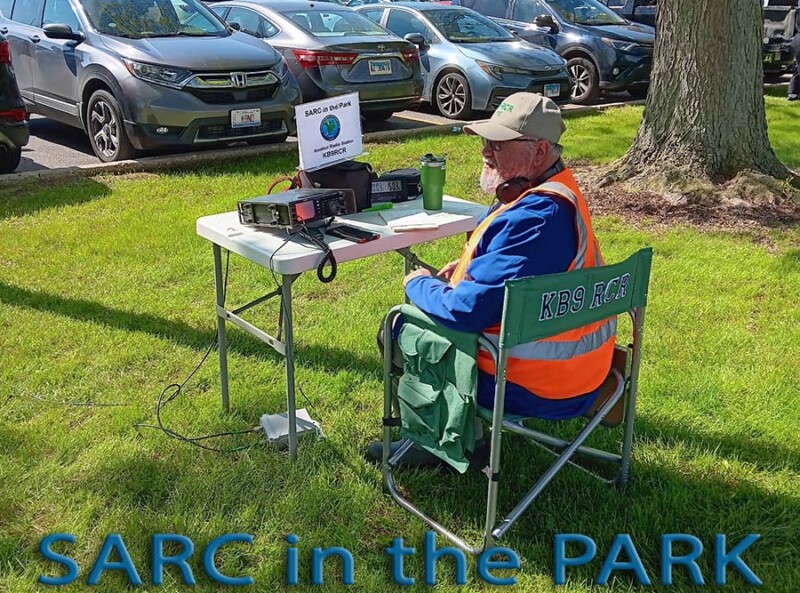
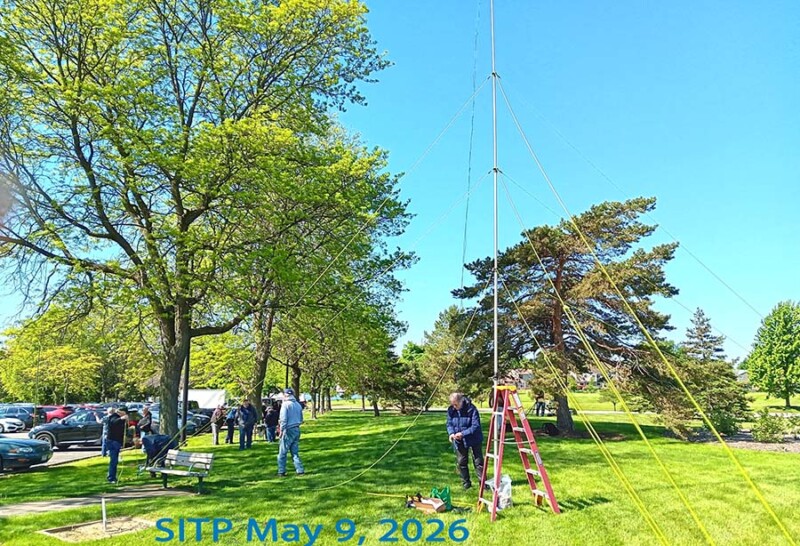
SARC in the Park is the club’s warm-weather replacement for Construction Project. It is intended to get members operating outside with portable radios, go-boxes, antennas, and batteries. The activity typically takes place on the front lawn of the Schaumburg Community Recreation Center on the second and fourth Saturdays of the month and is useful for learning to operate under “non-ideal conditions” (see n9rjv.org/activities/sarc-in-the-park).
Event Facts
Date
May 9, 2026
Time
7:00 AM–12:00 PM
Location
Front lawn of the Community Recreation Center, 505 N. Springinsguth Road, Schaumburg, Illinois
Weather observed from photos
Sunny and dry, with blue sky, light high cloud, and full spring leaf-out.
Notable equipment observed
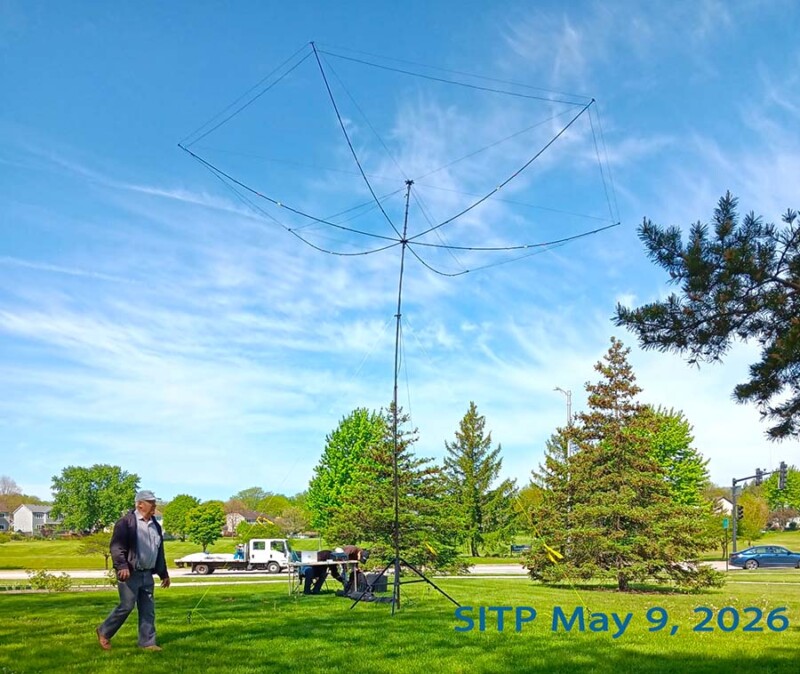
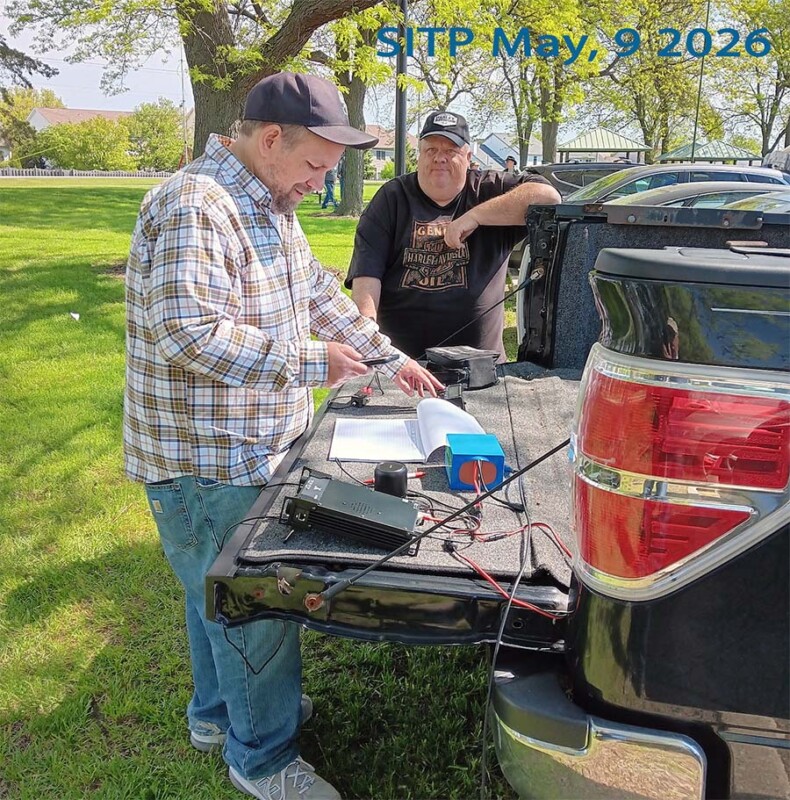
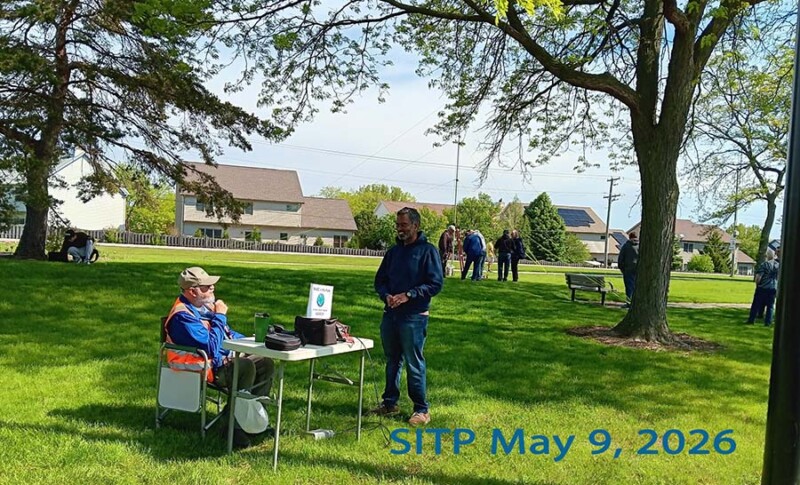
Large wire-beam-style antenna array, tall guyed mast, folding-table field station, HF transceiver, tailgate work surface with radio gear and paper log sheet, station sign “SARC in the Park Amateur Radio Station KB9RCR.”
Attendance / QSOs
Twenty-three SARC members in attendance. POTA contacts in: FL, PA, NH, WA, UT, OK, RI, WV, TX, MD, ID, CA, MA, WI, and MO.
SITP is the club’s warm-weather replacement for Construction Project and is intended to get members operating outside with portable radios, go-boxes, antennas, and batteries. This activity typically takes place on the front lawn of the Schaumburg Community Recreation Center on the second and fourth Saturdays of the month and is useful for learning to operate under “non-ideal conditions” (see n9rjv.org/activities/sarc-in-the-park).
The May 9, 2026 session was well aligned with SARC’s mission for the activity. Together, this documents operating, setup, adjustment, and support work rather than a purely social gathering.
The archival record on n9rjv.org’s SARC in the Park search page shows that this mix of experimentation and public demonstration is typical. A 2024 kickoff article emphasized the basics of successful outdoor activation—radio, power source, antenna, coax, and keeping the setup simple (see SARC in the Park Starts May 11).
A 2024 time-lapse post highlighted the setup of a hex beam antenna and associated equipment (see SARC in the Park Setup Time-Lapse). A 2023 report described an end-fed wire in a tree at the first outing of that season, while a 2019 report described several portable stations, a dipole, and operating that ran through noon (see First SARC in the Park and SARC in the Park – Saturday May 11th 2019).
The takeaway is that SARC in the Park functions as a recurring field laboratory for portable amateur radio. The May 9, 2026 event show several layers of that practice at once: a public-facing operating table, vehicle-supported station support, mast handling, and larger antenna deployment.
That range matters because it reflects both preparedness and accessibility. Smaller stations demonstrate that portable operation can be simple; the larger structures demonstrate that the event also supports more ambitious antenna work.
Ham Radio Field Day: From a 1933 Portable Test to SARC’s 2026 Open House
SARC Field Day 2026 invites new hams, experienced operators, families, students, and the general public to see amateur radio in action.
Every June, amateur radio operators across North America pack radios, antennas, batteries, generators, laptops, coax, tents, tables, and a lot of enthusiasm into parks, fields, emergency operations centers, school grounds, church campuses, and backyards. The event is called ARRL Field Day, and it is one of the best ways to understand what ham radio is really about.
Field Day is part picnic, part campout, part technical challenge, part public service exercise, and part friendly operating event. The goal is simple: set up radio stations, often away from permanent station locations, and make as many contacts as possible while learning how to communicate under less-than-perfect conditions. ARRL describes Field Day as ham radio’s open house and the most popular on-the-air event held annually in the United States and Canada.
For the public, Field Day answers an important question: What happens when normal communication systems are overloaded, damaged, or unavailable? For new hams, it answers an equally important question: How do I actually get on the air, make contacts, and become part of the amateur radio community?
A Brief History of ARRL Field Day
1933: The First International Field Day
The first ARRL Field Day was held June 10–11, 1933, under the name International Field Day. F. E. “Ed” Handy, W1BDI, then ARRL Communications Manager, is credited with conceiving the event. At first, it was presented as a practical test of portable radio equipment for amateurs in the United States and Canada.
That first event was modest by modern standards. About 50 portable stations participated, and the operating equipment of the day was far heavier and more difficult to power than today’s compact 12-volt transceivers. Early Field Day operators had to solve real problems: how to move equipment, how to power it, how to install temporary antennas, and how to communicate effectively away from the comfort of a home station.
1934: Emergency Preparedness Becomes Central
By the second Field Day in 1934, the purpose had become clearer. Handy described the event in terms of testing the emergency availability of portable stations and equipment. That idea remains at the heart of Field Day today: amateur radio operators practice building functional communication systems quickly, safely, and effectively when normal infrastructure cannot be assumed.
In the early years, portable operation was a very different challenge. Vacuum tube transmitters and receivers, high-voltage power supplies, storage batteries, generators, and handmade antennas required planning and teamwork. Field Day rewarded not only operating skill, but also preparation, engineering, improvisation, and cooperation.
World War II and the Postwar Return
During World War II, normal amateur radio activity was suspended, and Field Day was interrupted. After the war, amateur radio returned to the air, and Field Day returned with it. Postwar operators brought back renewed interest in emergency communication, portable operation, traffic handling, and technical experimentation.
The equipment changed dramatically over the decades. Heavy tube equipment gradually gave way to smaller transceivers, improved batteries, better portable antennas, solid-state radios, computers, digital modes, satellite operation, and modern logging software. Yet the basic Field Day question stayed the same: Can we communicate from almost anywhere, with temporary equipment, under abnormal conditions?
Field Day Grows Beyond a Radio Contest
Field Day includes scoring, contacts, multipliers, and operating classes, but it has never been only about points. Clubs use Field Day to train operators, test antennas, practice message handling, demonstrate emergency power, welcome public officials, teach visitors, and introduce new people to amateur radio.
ARRL’s current Field Day objective is to contact as many stations as possible on the authorized Field Day bands while learning to operate in abnormal situations and less-than-optimal conditions. The event also places a premium on emergency preparedness skills and public understanding of amateur radio’s capabilities.
In 2003, ARRL added Class F for stations operating from Emergency Operations Centers. That change reinforced Field Day’s connection to public service and emergency management. Today, Field Day operations may include portable stations in public places, home stations using emergency power, mobile stations, EOC stations, educational activities, digital demonstrations, satellite contacts, and Get On The Air stations designed specifically for new, inactive, and unlicensed participants operating under proper supervision.
ARRL Field Day 2026
ARRL Field Day 2026 will be held June 27–28, 2026. Field Day is always held on the fourth full weekend in June. The official ARRL operating period begins at 1800 UTC Saturday and ends at 2059 UTC Sunday.
Field Day contacts are made on the 160-, 80-, 40-, 20-, 15-, and 10-meter HF bands, as well as all bands 50 MHz and above. Field Day activity is not permitted on the 60-, 30-, 17-, or 12-meter HF bands. Voice, CW, and digital modes all have a place in the event.
Portable antennas and temporary stations are part of the Field Day tradition.
Why New Hams Should Attend Field Day
Getting an amateur radio license is exciting, but many new hams quickly discover that passing the exam is only the beginning. Field Day helps bridge the gap between “I have a call sign” and “I know how to operate.”
At Field Day, new hams can watch experienced operators handle contacts, log stations, use phonetics, change bands, troubleshoot antennas, manage noise, and work as a team. You can see how HF, VHF, CW, SSB voice, and digital communication fit together. You can ask questions without feeling like you are interrupting anyone’s home station. You can see what gear works well in the field and what “portable” really means.
Most importantly, Field Day gives new hams a low-pressure way to get on the air. You do not need to have a perfect station at home. You do not need to own an HF radio. You do not need to know everything. You only need curiosity and a willingness to learn.
Why the General Public Should Visit Field Day
Ham radio is often invisible until it is needed. Field Day brings it into the open.
Visitors can see how radio signals travel beyond cell towers, Wi-Fi networks, and the internet. Families can watch operators talk to stations across the country. Students can connect radio with science, electronics, geography, weather, emergency preparedness, and public service. Community leaders can see why trained amateur radio volunteers remain useful when storms, power failures, or other disruptions affect normal communication systems.
Field Day is also simply fun. There are antennas in the air, radios on the table, maps, headsets, microphones, Morse code, computer screens, signal reports, and operators celebrating each new contact. For many people, the first time they speak into a microphone and hear a distant station answer back is the moment radio becomes real.
Visit the SARC Field Day 2026 Event
The Schaumburg Amateur Radio Club invites new hams, experienced operators, families, students, neighbors, and the general public to attend the SARC Field Day 2026 event.
SARC Field Day 2026 Details
Event: SARC Field Day 2026
Member ONLY 24 hour on-air time: 1:00 p.m. Saturday, June 27, 2026 to 1:00 p.m. Sunday, June 28, 2026
Public on-air time: 1:00 p.m. to 4:00 p.m. Saturday, June 27, 2026
Location: St. Peter Lutheran Church, 202 E. Schaumburg Road, Schaumburg, Illinois 60194
Parking: Park in the northernmost lot. SARC will be in the North Field.
SARC’s Field Day site is designed to be welcoming. If you have never talked on a ham radio before, SARC can help you get on the air. No amateur radio license is required for visitors using the public Get On The Air station under the guidance of SARC coaches and the required control operator.
SARC plans to operate four radios for the event. One station is open to the public, where visitors can make a first contact with help from experienced operators. SARC will also demonstrate digital communication methods, and visitors are welcome to observe club members operating CW, SSB voice, and VHF voice stations.
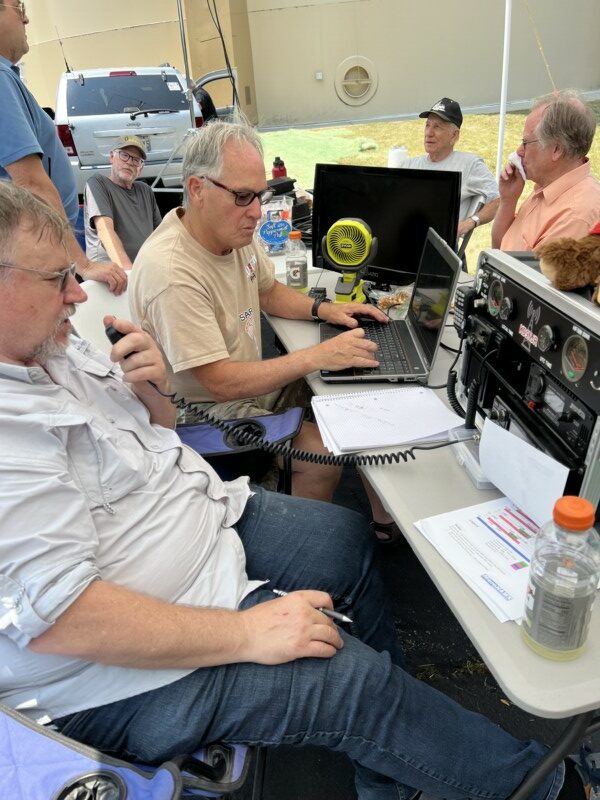
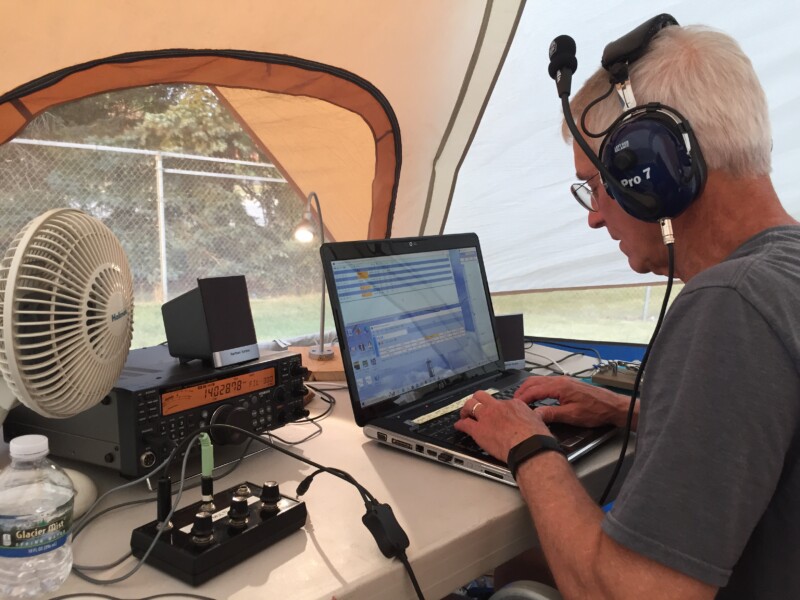
Field Day gives visitors a close look at real operating positions.
What You Can Do at the SARC Field Day Site
Make Your First Radio Contact
The Get On The Air station is the place to start. A SARC coach will explain what to say, when to speak, and how the exchange works. You may be surprised how quickly a first contact happens.
See Different Modes in Action
Modern amateur radio is more than voice. At Field Day, visitors may see voice operation, Morse code, VHF communication, and digital methods. Each mode has its own strengths, and Field Day is a great way to compare them.
Learn How Portable Stations Are Built
Field Day stations need antennas, feed lines, power, shelter, logging, safety planning, and teamwork. Walking around the site can teach as much as sitting at the radio.
Ask Questions About Getting Licensed
Thinking about becoming a ham? Field Day is one of the best times to meet people who can explain the license process, recommend study resources, and help you find your next step.
Meet the Local Amateur Radio Community
Ham radio is a technical hobby, but it is also a community. Field Day brings operators together to teach, learn, serve, experiment, and enjoy the hobby.
Why Field Day Still Matters
We live in a connected world, but much of that connection depends on infrastructure we do not control: power grids, internet providers, cellular networks, fiber lines, servers, and towers. Amateur radio is different. A trained operator, a radio, a power source, and an antenna can create a communication path from a field, a parking lot, a shelter, an emergency operations center, or a backyard.
That does not mean ham radio replaces modern systems. It means amateur radio adds resilience. Field Day is where that resilience becomes visible. It is where operators practice, where new hams gain confidence, and where the public can see that radio communication is still practical, relevant, and exciting.
From the first International Field Day in 1933 to the SARC Field Day 2026 event in Schaumburg, the spirit of Field Day has remained remarkably consistent: get on the air, learn by doing, welcome others, build skills, and be ready to serve.
Make Plans to Attend
Whether you are a licensed ham, a brand-new Technician, a student, a parent, a scout, a teacher, a public official, a neighbor, or just someone who wonders what those antennas are for, SARC Field Day is for you.
Stop by St. Peter Lutheran Church in Schaumburg during SARC’s public operating hours. Park in the northernmost lot, look for the North Field, and ask for the Get On The Air station.
Come see what ham radio can do. Better yet, come make your first contact.